

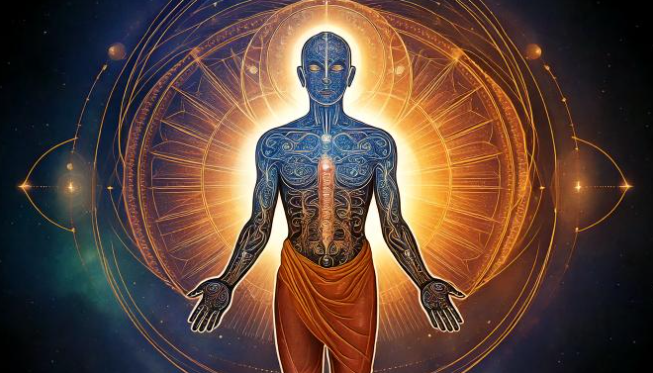
What is enlightenment?
Enlightenment means freedom from suffering, attachment, and ignorance. It’s the liberation that comes when we stop clinging to things—both physical and mental—that cause pain and confusion.
Suffering exists because we ignorantly chase after fleeting pleasures where no lasting joy can be found. Along the way, we get attached. But when most people think about letting go of attachment, they often swing to the opposite extreme. Ironically, their attachment grows even stronger, even as they believe they’re practicing detachment.
Attachment
What are we attached to?

Let’s begin with the most obvious attachment—our body, or rupa in Pali.
Illusion
The illusion of identifying with the body can sound like:
“I am my body”. — “Oh, I am so fat!”. Illusion — “I am…”
“This is my body”. — “My body hurts!”. — Illusion “My”
“I exist within the body” — “I feel so trapped by my disability” — Illusion of existing inside/outside
We mistakenly believe that these physical conditions represent our essence. The truth is, the body is impermanent and always changing, yet we cling to it as if it were our true self.
While there’s nothing grammatically wrong with these statements, and in conventional truth, they make sense, ultimately, the body’s conditions do not define who we are. It’s impermanent. It is not our true self.
Extreme #1: Caring Too Much

When we care too much about our body, we fall into the trap of obsessing over its appearance or how others perceive it. Think of a teenager constantly stressed, asking, “Is my nose crooked? Do I have too many freckles?” We suffer because we chase perfection in something that is naturally imperfect and temporary.
In today’s world, this attachment is visible in our obsession with body image—endless gym routines, cosmetic surgeries, and fad diets, all in the pursuit of the “ideal” body. But in chasing this, we’re actually chasing after suffering.
Extreme #2: Caring Too Little
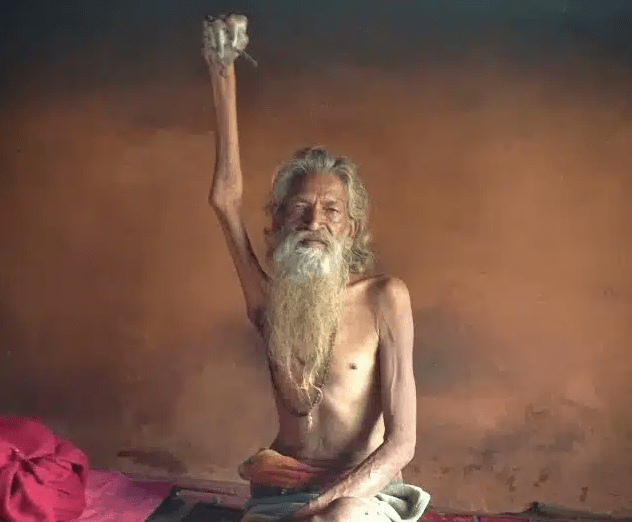
Amar Bharati. The Indian Ascetic that Hold His Arm Up for World Peace Since 1973 Credit: DublinSoil / Twitter
On the other hand, disregarding the body entirely can be equally harmful. Some Indian ascetics, for example, practice extreme austerities like holding an arm up for so long that it becomes permanently paralyzed. This detachment from the body’s basic needs is another form of attachment—an attachment to the idea that the body doesn’t matter at all.
These extremes—either obsessing over or neglecting the body—both stem from attachment. We desire the body to be one way, and we fear it becoming another. This, too, causes suffering.
Desire → Attachment → Suffering
How to Transcend
Wisdom lies not simply in avoiding extremes. The Buddha’s “middle path” isn’t just a balance between two extremes; it’s a deeper understanding of cause and effect. When we nourish the body, it functions better. But this doesn’t mean we obsess over diet or disregard our health altogether.
True wisdom is recognizing that the body has needs—good nutrition, rest, movement—but it is not our true self. Obsessing over health becomes another form of attachment, just as neglecting it does.
Practice: Overcoming Attachment to the Body
So, how do we begin to overcome attachment to the body? By observing our tendencies in everyday life.
Daily Mindfulness: Observing Your Body
- If you’re doing too much, try to do less. Notice when you become fixated on your appearance or health. For instance, observe moments when you’re overindulging in fitness routines or cosmetic concerns. Ask yourself: can I let go of the need for perfection?
- If you’re doing too little, try to do more. Are you neglecting your body’s needs—skipping meals, ignoring rest, or neglecting basic self-care? Begin to appreciate the body as a tool for your practice, not as something you identify with.
However, it’s not always easy to recognize our own tendencies. For example, someone with anorexia may believe they’re eating too much, when in reality, they’re eating too little. This distorted perception shows just how blind we can be to our own attachments. Sometimes, we need a “mirror”—a friend, teacher, or mentor who can reflect back to us without judgment.
In sports or exercise, you can also observe these tendencies. Push yourself, but without crossing the line into self-harm. Learn to recognize when your body is genuinely tired and needs rest, versus when it’s simply seeking comfort. Can you observe the desire to stop or sit without reacting immediately?
At the same time, if you become too harsh on your body—driving yourself too hard—the will becomes overactive. Balance is key. Learn to listen to your body’s signals, without giving in to every urge or pushing beyond healthy limits.
Meditation: A Gateway to Understanding the Body
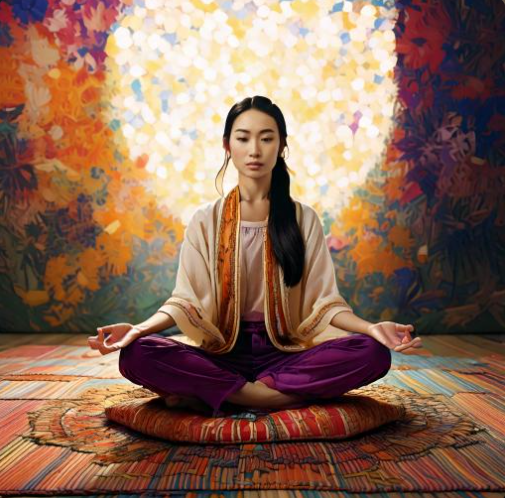
Meditation is one of the best ways to gain insight into bodily sensations. If you sit long enough, your leg may fall asleep or discomfort may arise. Can you observe this without reacting? The longer we stay present with these body signals—without resisting them or causing harm—the more the body begins to “disappear.” It becomes lighter, and its presence fades from the forefront of our awareness.
As the body fades, even the breath becomes refined, quiet, almost imperceptible. In this state, the path to transcending attachment to the body is revealed—not as an abstract concept, but as a direct experience.
 Discover the Light within