

Intro
Mindfulness—this beautiful practice of being in the present moment!
Have you heard about mindfulness and meditation, tried it and figured out that it is not as easy as it may have been portrayed? Or you are a long time practitioner, but you feel stuck? Let’s try to explore reasons why!
Prologue

Let’s set an imaginary scene. A peaceful Buddhist monastery—green grass, vibrant flowers, bathed in sunlight and rain. Visitors come, feeling the weight of daily struggles lift as soon as they arrive. Their shoulders drop, their breathing slows.
A young man inspired by the story of the Buddha and his ability to rise above the worldly realm decides to become a monk. He is not a lazy one, working hard from an early age at hard labor jobs, he is disciplined and is not afraid of hardship.
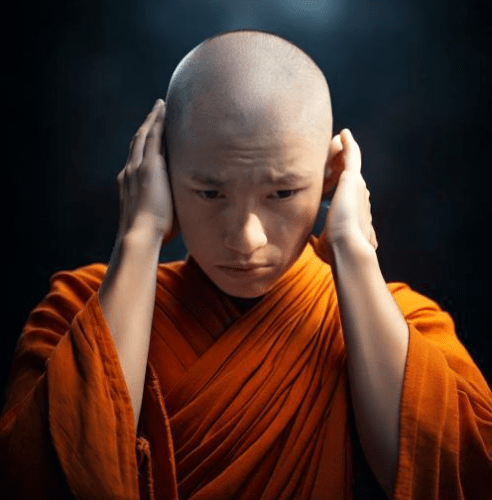
But the more he tries to stay in the present, the more the past follows him. During prolonged meditation sessions his mental health starts to deteriorate, including some tactile and auditory hallucinations. The voice of a man saying nasty sexual stuff and his hand reaching to him, were so real he couldn’t sit no more!
He is advised to do less sitting meditation and just go for a walk, which makes him feel inadequate. He is lost, he does not know what is going on, he is confused and really just needs someone to talk to. But this is a quiet setting, where monks are advised not to look back at the past, but stay in the present moment and ignore mind fluctuations.
The result is that he is deemed as sick, one whose mind fails him and he can’t even find peace in meditation, what a failure!
Have you ever felt frustrated because you couldn’t stay present? Drop a comment and let me know! I noticed that the first reason why mindfulness practice does not seem to work is related to this story.
Reason number 1
The present moment doesn’t exist
If you can stay fully present in the moment—fantastic! But if your mind often drifts when you try to focus, let’s reflect on that. Mindfulness, originally from Buddhism, translates from the Pali word “sati,” meaning memory. We can even find parallels with Latin, like in “maranasati” (marana – death, sati – memory), just like “Memento Mori”!
When people start meditating, attention often wavers after just a few seconds. You might focus on your breath, but quickly get distracted. Even as you improve, the mind still wanders—itching your nose, adjusting your posture—anything but the present.
Yet, when watching an exciting game or movie, we can stay focused effortlessly, even ignoring discomfort. Forgetting that out legs got numb, and we needed to go to the bathroom. So everyone one of us has this innate ability of concentration, that surpasses time and spice. So, why can’t we be present in reality? It’s because we’re used to escaping anything unpleasant.
Take the real example of a man who dissociates so deeply that he can’t even remember why his wife divorced him. (Take a look ) He got used to leave mentally during the hard moments. We all have some form of trauma, though maybe less severe, which pulls our attention from the present.
To stay present, we must free the attention tied to our past. Traumas or unresolved issues can be like knots, pulling us out of the moment. Untangling them helps us fully enjoy the “here and now.”

If staying present feels as hard as balancing on a unicycle while juggling, you’re not alone. It’s easier to binge-watch a show than focus on your breath!
Reason Number 2
Spiritual Bypassing
“Why do people seek mindfulness and meditation? Often, they’re looking for peace, if they are looking for something means they don’t have it, right? Instead, they might have stress, anxiety, all kinds of problems and dissatisfaction with life. And what do we want to do? Escape it.
When I was a nun, many retreat attendees would tell me they struggled with anger. They didn’t know how to control it or stop getting angry. I’d always share a personal story.
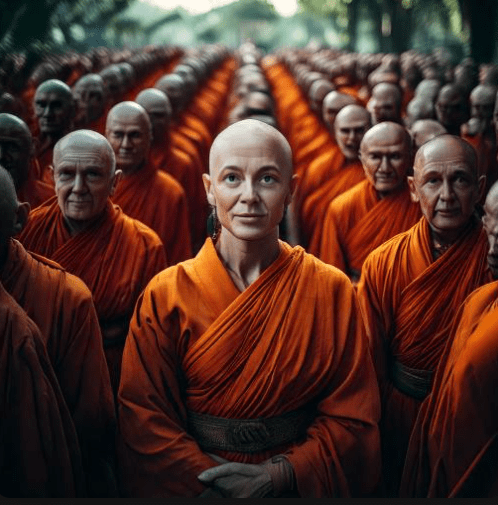
Before I became a nun, I was a calm, introverted person, content with solitude. Then, I found myself in a busy monastery in Taiwan, surrounded by older nuns who, with the best intentions, helicoptered around me. I hated it but felt guilty because I knew they meant well. I struggled for months, trying to control my anger.
On the outside, trying my best to express gratitude and respect in Chinese way I’d say 謝謝, 感恩, 謝謝師父慈悲開示, 這個點心真的很好吃, 但是我有一點不要這些东西 ! Thank you, appreciate it, thank you Master for your compassionate guidance. This snack is really delicious, but I don’t want these things at all!
But inside, I was furious: ‘Can you leave me alone? I don’t want you sharing your snacks with me, I want silence, I want solitude, I want to practice asceticism!’ Then I’d feel so ashamed, they mean well, why can’t I just say thank you and move on? I would get angry at myself for getting angry at them.
I would go to my room, meditate, eventually calm down and chant in front of my door before stepping out: “I am not going to get angry”. But I was only calm alone. Eventually, I learned just like Ajahn Chaa says, anger is not yours to control. I knew the teaching but now I received a heart-to-heart transmission on how to be brave and to stay with the anger, or with the unpleasant. Not to follow, not to fight. Just stay. Feelings aren’t’ something you control—it’s something you stay with. Like a child learning that hitting others is wrong, but feeling angry is okay. Anger is important because it helps us to protect our boundaries.
Anger, like any feeling, has a beginning, middle, and end. We notice its peak, but often miss it when it fades. Mindfulness isn’t about calming these emotions—that’s spiritual bypassing. It’s about staying with them, accepting them, and noticing how they come and go. If you want a successful mindfulness practice, don’t try to stop feelings. Instead, allow them. When we accept them, that’s when transformation happens.”
It’s like when you’re playing a video game and you think you’ve found a shortcut, only to realize you’ve missed the whole point of the game.
Emotions? Yeah, no skip button for those.“

Reason number 3
Mindfulness as a Trend:

‘I’m totally into mindfulness,’ says the person mindlessly scrolling through their phone
Just like we might see an expensive car and think, ‘I want that,’ we can see a peaceful clip of someone meditating and think, ‘I want that too’
Many people approach mindfulness as a fad or quick fix, without truly understanding its deeper purpose. When mindfulness becomes something to “check off” on a wellness list, the practice lacks sincerity, preventing genuine transformation.
If it doesn’t come genuinely authentically from within then why practice it? I remember being a teenager and I played the game “I am not like everyone else” and that game included listening to certain types of music, reading books. For example right now I can admit that I am too stupid to read Ulysses by James Joyce, but I pretended to like it when I was a teenager.
So if your practice of mindfulness comes because someone who does it seems cool to you and you want to seem cool too, please be kinder to yourself! You don’t have to shapeshift to be liked by others. You deserve better! You deserve to shine with your authenticity to the world!
Reason number 4
Attachment to Outcomes:
Many people get too attached to specific results in their mindfulness practice—wanting constant peace, happiness, or clarity. But mindfulness isn’t about getting specific outcomes, it’s about accepting things as they are. This attachment leads to frustration when those expectations aren’t met, missing the essence of mindfulness, which is acceptance of what is, not what should be.
I liked being a nun when you get to experience everyday meditation in all kinds of mental states. Today I hate meditation state, next day I love meditation, or I am killing it, or I am just hopeless peace of shit. And slowly I got to detach the “self” from those changing conditions, and just observe things as they come and go. Sitting through “I hate meditation” even for five minutes without wishing to start enjoying meditation, is way much more beneficial then “always killing it”

Expecting instant enlightenment from mindfulness is like planting a seed and checking every hour to see if it’s grown into a tree. Spoiler alert: trees—and inner peace—take time. So, if you’re waiting for that ‘zen moment’ after two minutes of meditation, you might want to grab a snack
Reason number 5
Lack of Integration:
“You know that friend who only goes to the gym once a month but talks about it like they’re a fitness guru? Yeah, practicing mindfulness only when it’s convenient isn’t going to give you those mental muscles.”
Mindfulness cannot be isolated from daily life. If one only practices mindfulness during short sessions, which is a good start! but doesn’t carry that practice into daily interactions, emotions, and decisions, the benefits become fragmented. The real power lies in integrating mindfulness as a default mindset, rather than a technique to be performed at a set time.
Reason number six
Taking it too seriously
“I was that kid who never smiled in pictures—always taking things too seriously. Like the time I was on retreat at a Buddhist monastery, grumpy during fireworks because I thought, ‘We’re here to meditate, not have fun!’ And trust me when I say to you, you gotta have some fun! Play with the practice, make it interesting, make it fun, be curious and free spirited. Your own mind is bored with you taking things too seriously, so it runs away from being present.
When you’re so focused on mindfulness that you forget to laugh at yourself, that’s when you know it’s time to lighten up. If the Dalai Lama can crack jokes, so can you!”

Outro
First of all, you’re doing amazing! You’re thinking about mindfulness, you’ve tried it, and you want to make it better—that’s already a huge step! Be proud of yourself, and remember, it’s not supposed to be easy!
“In the end, don’t worry if your mindfulness practice doesn’t look perfect. Nobody’s sitting there grading your meditation sessions. Just keep practicing, laugh at the bumps, and enjoy the ride!”
Watch a full video here:
 Discover the Light within