

Chapter 1. Attachments are bad
If you’re familiar with the spiritual world, you’ve likely heard the idea that attachments are bad. “Just let go of all your attachments,” they say, “and all your problems will disappear. You’re suffering, you’re struggling, you’re in pain—all because you care too much. Just let go, and everything will be better.”
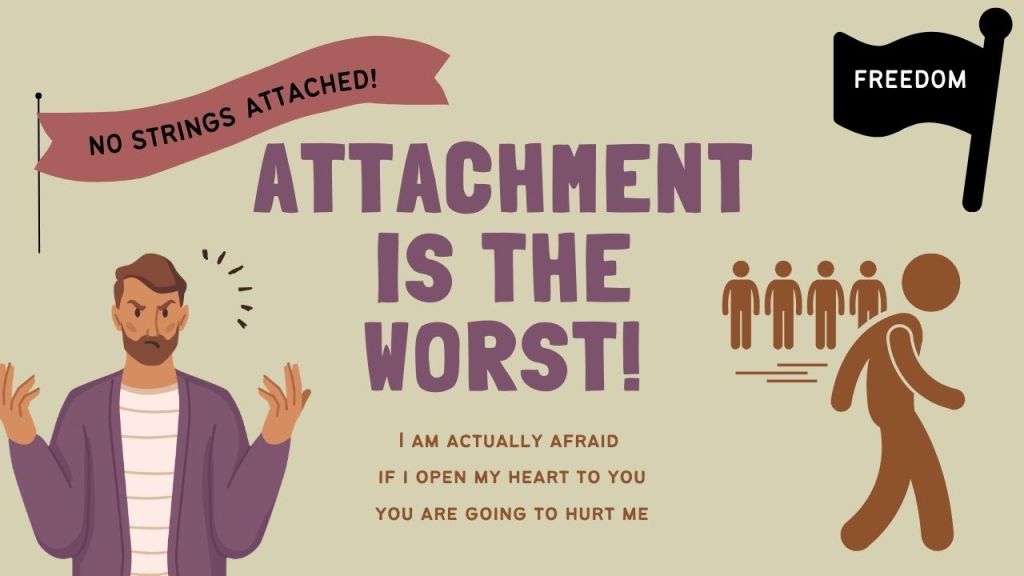
Today, I want to introduce a different perspective. Attachments are crucial for human beings, not just for survival but for personal growth and well-being. Understanding attachments in the right way can help us navigate through life’s challenges, moving us from the world of overly simplified spiritual ideas to one grounded in modern psychology.
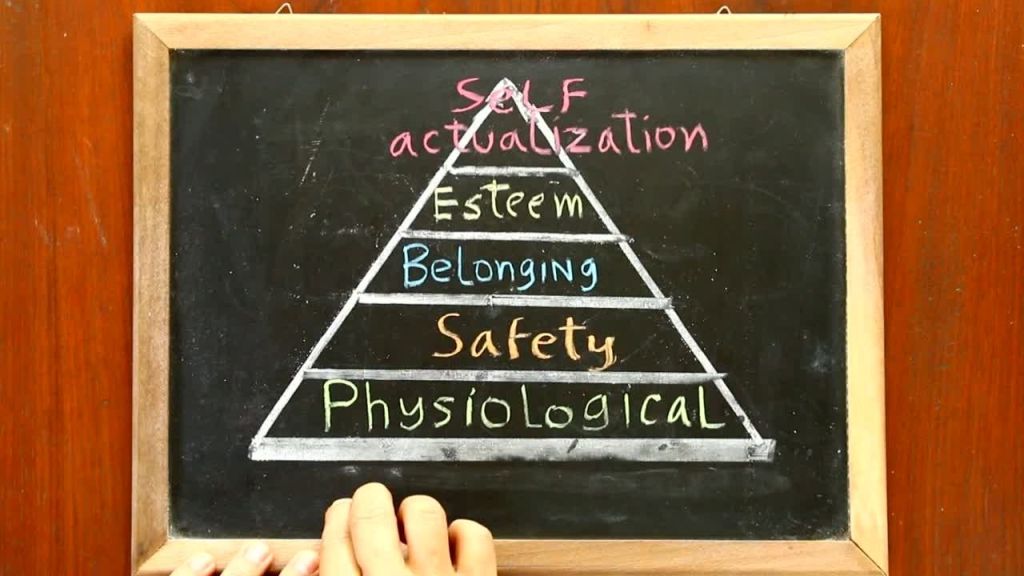
Let’s begin with the basics. When human beings are born, they are incredibly helpless. In order to survive, infants need to form secure bonds with caregivers—nurturing, loving, and protective figures. This is a matter of life and death. Contrary to Maslow’s hierarchy of needs, where love and care are placed after physical needs, research by Harry Harlow shows otherwise.
Harlow’s experiments were deeply disturbing, involving infant monkeys separated from their mothers and placed with two artificial “mothers.” One was a wire frame that provided milk, and the other was a similar frame covered in soft cloth, offering no food. Surprisingly, the baby monkeys spent most of their time clinging to the cloth mother, only reaching for the wire one when they were hungry. Once fed, they immediately returned to the soft, comforting mother figure.

This shows that the emotional bond, symbolized by the soft mother, was more effective in reducing the young monkeys’ fear and anxiety. It supports the evolutionary theory of attachment—both in humans and animals, the bond with a caregiver is essential for survival. In other words, the need for love, care, and emotional security outweighs basic physical needs.

Additional experiments revealed that monkeys raised without the comfort of the cloth mother—interacting only with the wire one—grew up with significant social deficits. They struggled to form social bonds, protect themselves from bullying, or develop healthy mating behaviors. Females raised in these conditions became inadequate mothers themselves, even sometimes harming their offspring.
Although such experiments were not done on humans (at least not ethically or officially), we see similar effects in cases of severe neglect or when children are raised in isolation, such as in feral child cases. These children may survive physically, but they cannot develop into fully functioning adults.
So, returning to the statement about attachments: the bond between a caregiver and a child is not only important—it’s essential. In modern psychology, we classify attachments into four types, based on the famous “Strange Situation” experiment by Mary Ainsworth.
The most common type is secure attachment, said to occur in 50-60% of the population. The core belief here is, “I’m okay; you’re okay.” A child with secure attachment trusts that their emotional and physical needs will be met by their caregiver. These individuals grow up feeling safe in relationships, able to balance intimacy with independence.
Next is avoidant attachment, which is estimated to affect 20-25% of people. The belief here is, “I’m okay; you’re not okay.” Children with avoidant attachment learn that they feel better when the caregiver is absent, growing into adults who prefer to be alone. They often avoid close connections and struggle with intimacy. It wouldn’t surprise me if many monks, hermits, or spiritual figures who preach against attachments had this avoidant attachment pattern in childhood.

The third type is anxious attachment, affecting 15-20% of the population. The belief here is, “You’re okay; I’m not okay.” Individuals with this attachment style only feel secure and valuable when they are loved and cared for by others. They often appear clingy and anxious, struggling to find self-worth without constant affirmation from those around them.

Finally, there’s disorganized attachment, present in about 5-10% of the population. This form usually results from severe trauma or abandonment. It’s called disorganized because the person’s emotions are contradictory: “Stay here—I hate you! Leave me alone—I love you!” They feel anxious when their partner is away, but when close, they feel the need to avoid or detach.

It’s important to note that trauma can range from extreme cases of abuse and neglect to less dramatic events that still have a deep emotional impact. I was surprised to discover that I, too, had developed traces of disorganized attachment in certain areas of my life.
Personal story
For most of my life, I believed I fit into the avoidant attachment category. I was the typical introvert who preferred being alone. After all, I became a Buddhist nun. I struggled to be okay with my family, my friends, and most of all, with myself. I was lost in self-destructive habits—cutting, smoking, drinking. I started smoking at 11, and by the time I was 12, I was already drinking vodka with a group of underage girls. By 13, I was smoking marijuana, and almost got kicked out of high school after failing three grades. At 14, I moved away from my parents to another country, determined to turn my life around.
That’s when I started to explore meditation, mindfulness, and self-awareness. I studied Clinical Psychology, yoga, and meditation. Slowly, I became more comfortable not just with myself but also with others. Standing in front of people was once terrifying, but eventually, I became a martial arts instructor. It was my daily job to be around people, to engage with them, to lead them. I learned to be open, even extroverted—joking, teaching, interacting. But as soon as class ended, I’d retreat. I didn’t know how to connect with others outside of my role as a teacher.
The solitude of meditation continued to feel like my refuge. I began traveling to Thailand, spending time in meditation retreats, and eventually, at 32, I became a Buddhist nun and moved to Taiwan. In the beginning, life as a nun was difficult. I’ve spoken about this before—everything changed. I didn’t understand the language, the culture, or even the food, which often made us sick. There was constant discomfort, but with the help of my teacher, I began to find clarity, particularly about suffering—the First Noble Truth in Buddhism.
I remember having a conversation with my teacher where I admitted, “I just don’t know how to live. The world is full of suffering and pain. I see everyone struggling, and I don’t even have the energy to strive for anything. There’s so much murder, abuse, war—what’s the point of it all?”
She looked at me and said something profound: “Yes, suffering exists. It doesn’t matter if you agree with it or not, if you want to fight it or not. Suffering was here before you, it’s here now, and it will be here in the future. The question is, can you open your heart to it?”
That insight changed me. I began practicing in a way that allowed me to welcome suffering, to literally and emotionally open my heart to it. I realized that much of the pain I felt came not from the suffering itself, but from my resistance to it. When we push suffering away, trying to avoid discomfort, we increase our pain. But when I allowed myself to fully feel it—when I let it touch my heart, my body, my mind—it simply became what it was. I could acknowledge it without being crushed by it. I was aware of suffering, and I could do my best to address it, but it no longer overwhelmed me.
Later, after moving to America, my meditation practice deepened. It reached a peak during a three-week personal retreat. One night in particular, I experienced something I can only describe as stepping into a space beyond time and form. I radiated light, my body and mind immersed in a state of pure being. It was indescribably beautiful.
But when I returned to the world, I saw the suffering around me even more clearly. I had to ask myself a hard question: Do I stay in this state of blissful detachment, or do I roll up my sleeves and engage with the pain of others? I wrestled with this for half a year, and then had a powerful experience that answered my question.
I realized that if suffering exists, there is a cause for it—and if there’s a cause, there’s something I can do to help those struggling around me. I turned inward and began working with a concept I later learned about through Internal Family Systems (IFS) therapy: the idea of exiled parts of ourselves. When we experience trauma, parts of us can split off. For instance, a sensitive boy with an abusive father might hide his vulnerable side to protect himself. That part doesn’t disappear; it remains, exiled, causing an overreaction whenever someone threatens that vulnerability again.
In my own journey, I found and reintegrated a part of myself that had been exiled. This process helped me realize that, instead of running from my humanity—my vulnerability, my emotions—I needed to embrace it. For the third time in my life, I decided to turn everything around.
I left monastic life, got married, found a job, and embraced a simple, human existence. I stopped pretending to be someone above it all. I am not enlightened, but I am deeply grateful for the insights I’ve gained over the years. I no longer need validation from others to recognize the value of my experiences.
However, leaving monastic life revealed something I hadn’t fully understood—I had been protected by the status of being a nun. It created a division between “us” (the monastics) and “them” (the laypeople). As a nun, I was respected and placed in a role where I felt secure. But now, as a regular person, I often feel disconnected. I’ve learned how to be okay when I’m alone, but I’m still figuring out how to be with others. Sometimes I don’t even know what I want or feel in social situations.
This disconnection reminded me of my avoidant tendencies and brought me back to the contemplation of attachment styles. And that’s why I’m sharing this story now.
How to change your attachment style?
It is wonderful if we have a secure attachment style and are comfortable with ourselves and others, allowing for intimacy and closeness while also being self-reliant and independent. However, the truth is that most of us do not fit this mold. I find it hard to believe the statistics I mentioned earlier. So, what do we do if we have an insecure attachment style?
The common advice is to find someone with a secure attachment style and learn to trust again. But in reality, it doesn’t work that way for everyone. I have a close friend who divorced her husband, not because they were arguing—she told me they never did. At the time, I found this surprising; it seemed like such a strange reason to divorce, as most people argue. Now, I understand that she was missing the turbulence from her childhood, and her husband’s calm demeanor did not provide the emotional chaos she was accustomed to.
Our brains expend a lot of energy trying to save it, often by creating patterns based on past experiences. For instance, if I grew up with emotionally distant parents, I might feel anxious around them because I am unsure of their love and care. This uncertainty becomes my norm, and I may find myself gravitating toward partners who are emotionally unavailable or ambivalent, thus perpetuating my cycle of worry and anxiety. This pattern negatively impacts my mental and physical well-being.
So, how do we create secure bonds when we are conditioned by our past? Often, we are drawn to people who treat us poorly or ignore our emotions. The truth is that we need to give ourselves what we seek from others. For example, if I experience worry, I try to investigate what lies behind it—what am I afraid of? Once I identify my fear, I work on addressing it. If I was taught that expressing negative emotions is bad—if I believed that being angry, sad, or overly sensitive makes me undesirable—I might fear that expressing my feelings will push others away.
I need to allow myself to feel angry or sad without immediately seeking distractions like drinking, eating, partying, or scrolling through my phone. If I feel sadness, I can simply acknowledge its presence without feeling the need to fix it immediately. I’m not referring to clinical depression, but rather the everyday sadness that we all experience.
Towards the end of this video, I’ll share the process I undertook to help myself. However, I want to return to the initial point about attachment styles. When we understand and cultivate a secure attachment with ourselves, we learn to reparent ourselves. This means we no longer need to retreat into spirituality or isolate ourselves in the mountains because we feel unsafe among others. We can be content wherever we are—whether in the mountains or surrounded by people—because we have established a strong connection with our own thoughts, feelings, desires, and needs.
We can feel stable and comfortable, trusting ourselves to provide for our own well-being. In this sense, reparenting involves recognizing that children thrive in environments with clear boundaries. You can be your own best friend by holding yourself accountable without being harsh or judgmental. This concept echoes what the Buddha taught in his last sermon, where he advised his students to “Be your own island, be your own refuge, seek no other refuge.” While it’s wonderful to learn from mentors and be humble in their presence, no one knows us better than we know ourselves.
To trust ourselves and be in tune with our feelings and intuition, we must honor them without becoming slaves to them. Until we achieve this self-awareness, we remain susceptible to external influences—whether from organized religion, spiritual sects, or pop culture. We may find ourselves enslaved to money, trends, or political agendas.
The journey toward a secure emotional space requires patience. If it took us years to arrive at our current state, we must also give ourselves ample time to relearn and reshape our attachment styles. It’s essential to identify our patterns: Do we tend to withdraw from people? Do we rely too heavily on others? We may experience both tendencies throughout our lives, even within a single day. Observing these behaviors without judgment is crucial. What has brought us to this point has helped us survive, so we should be grateful for our resilience.
However, we can still strive for better emotional security. For example, if you identify with an avoidant attachment style, consider how your upbringing may have influenced this. Perhaps your parents were emotionally unavailable, leading you to stop reaching out because it never paid off. This pattern could result from inconsistent responses; sometimes, your parent might be warm and engaging, while other times, they may react with anger. This unpredictability creates a desire to distance oneself to avoid further emotional turmoil.
My personal experience with avoidant behavior stemmed from being punished for expressing my emotions. We live in a society where many people struggle to accept their own emotions. Consequently, when someone expresses their feelings, it can provoke discomfort in others. If a child feels unsafe expressing sadness, loneliness, or boredom, they may learn to suppress those emotions, leading to further isolation and confusion.
If you identify with an anxious attachment style, similar factors can contribute to your emotional responses. Inconsistent caregiving, where a parent oscillates between warmth and coldness, can create anxiety. When returning home from work, you might find yourself unsure of your parent’s mood, leading to a buildup of anxiety within you.
Overprotective or intrusive parenting can also instill anxiety, as these behaviors often stem from a parent’s own fears and worries. We absorb these anxieties, internalizing them as our own. If we cannot rely on emotional support from our parents, we may struggle to navigate our feelings independently. The desire for reassurance, such as being held and told everything will be okay, remains unfulfilled, leading to a deep-seated sense of worry.
For those with disorganized attachment styles, severe trauma, abuse, or neglect may play significant roles in their emotional responses. In such cases, parental roles can become reversed, resulting in what is known as parentification, where the child must protect the parent. Despite these challenges, we can develop greater self-reliance and respect for our own minds and bodies, as well as for others.
Learning to be okay with ourselves—whether in the company of others or alone—allows us to establish a secure emotional space. We can take a deep breath and create a mental refuge, regardless of external circumstances.
As the saying goes, “Know thyself.” Gaining information from therapists, spiritual leaders, books, or friends is valuable, but the most profound understanding lies within you.
Returning to my original point, attachment styles are not inherently negative; rather, they are crucial components of our spiritual development. This understanding is essential both in childhood and adulthood, as we continue to act according to the patterns imprinted on us during our formative years. We cannot spiritually bypass our avoidant behaviors by merely labeling them as spirituality.
As Joe Dispenza aptly puts it, we must be consciously aware of our unconsciousness. If we are avoidant, much is happening beneath the surface—fear, trauma, and unacceptance create barriers to our freedom. True spiritual growth requires us to confront these issues and release the energy that keeps us tethered to the past.
If you believe you are not good enough, it’s vital to learn that you are inherently worthy. However, mere affirmations are insufficient; you must genuinely work to cultivate that belief. If you perceive people as dangerous and feel the need to distance yourself from them, you need to discover how to be comfortable both with and without others.
This is how authentic spiritual growth occurs—by understanding attachment and recognizing that even avoidant behavior is a form of attachment. I have encountered many spiritually inclined individuals who seem uncomfortable around others. This discomfort often leads them to preach the importance of solitude.
In conclusion, attachments themselves are not detrimental; rather, they can guide us in understanding our behaviors and liberating ourselves from the constraints of our past. By doing so, we can become more vulnerable, open, and connected with others. We are all part of a collective human experience, interconnected yet independent. This, too, is a form of spiritual growth, a vital aspect of enlightenment that emerges when we free ourselves from past conditioning.
 Discover the Light within